


 English

5-axis CNC Machining is an advanced manufacturing process that uses computer-controlled movements along five axes to produce complex parts with high precision. Unlike conventional 3-axis machining, a 5-axis CNC machine can rotate the cutting tool or workpiece to access multiple surfaces and angles in a single setup. This capability makes it possible to manufacture intricate geometries, curved surfaces, angled holes, and precision components more efficiently.
Understanding how 5 axis CNC works helps engineers and manufacturers determine when this machining technology is the right choice for their projects. From aerospace components and automotive parts to medical devices and industrial equipment, 5-axis CNC machining offers greater design flexibility, reduced setup time, and improved machining accuracy.
What Is 5-Axis CNC Machining?
5-axis CNC machining is a subtractive manufacturing process in which a cutting tool removes Material from a workpiece while the machine operates along five controlled axes. These axes include three linear movements and two rotational movements, allowing the cutting tool to approach the workpiece from different directions.
The three linear axes are X, Y, and Z, which control movement along the horizontal, vertical, and depth directions. The additional two rotational axes, commonly referred to as A, B, or C axes depending on the machine configuration, allow the tool or workpiece to tilt and rotate.
Unlike 3-axis CNC machining, which generally requires repositioning the workpiece to machine different surfaces, a 5-axis CNC machining center can reach multiple faces and complex contours without repeatedly changing the setup.
This makes 5-axis CNC machining particularly suitable for manufacturing parts with intricate geometries, tight tolerances, and demanding surface finish requirements.
How Does 5 Axis CNC Work?
A 5-axis CNC machine works by coordinating five movements simultaneously or through different combinations of linear and rotational motion. The machine follows programmed toolpaths generated from CAD and CAM software to remove material and transform a raw workpiece into a finished component.
1. CAD Model Design
The machining process begins with a 3D CAD model of the part. Engineers create the digital design based on the component's dimensions, geometry, tolerances, and functional requirements.
The CAD model provides the geometric information needed to plan the machining process, including complex surfaces, pockets, holes, grooves, and other features.
2. CAM Programming and Toolpath Generation
The CAD model is imported into CAM software, where machining operations, cutting tools, tool orientations, feed rates, spindle speeds, and toolpaths are defined.
For 5-axis CNC machining, CAM software determines how the cutting tool or workpiece should move across all five axes to reach different machining surfaces while avoiding collisions.
The generated toolpaths are converted into CNC machine instructions, allowing the machine to execute the machining operations accurately and consistently.
3. Workpiece Setup and Tool Selection
The raw material is securely positioned on the machine table, fixture, or rotary system. Depending on the part geometry, machinists select appropriate cutting tools, fixtures, and machining strategies to ensure stability and precision.
Proper workpiece positioning is essential for maintaining dimensional accuracy, minimizing vibration, and preventing tool interference during 5-axis machining.
4. Five-Axis Movement During Machining
During the machining process, the CNC machine coordinates movement along the X, Y, and Z axes with two rotational axes.
The cutting tool can approach the workpiece from different directions, allowing the machine to mill angled surfaces, complex contours, deep cavities, and multiple faces.
Depending on the machine configuration and machining strategy, the five axes may move simultaneously or in coordinated positioning sequences. This flexibility enables more complex machining operations than conventional 3-axis CNC milling.
5. Inspection and Quality Control
After machining, the finished part is inspected to verify its dimensional accuracy, surface quality, and conformity to the engineering drawing.
Depending on the component's requirements, inspection may involve precision measuring instruments, coordinate measuring machines (CMM), surface roughness testing, and other quality control methods.
Proper inspection ensures that the machined component meets the required specifications before delivery.
What Are the Five Axes in a 5-Axis CNC Machine?
A 5-axis CNC machine combines three linear axes with two rotational axes. The specific rotational configuration varies between machine designs.
| Axis | Movement | Function |
|---|---|---|
| X-axis | Left and right | Controls horizontal movement |
| Y-axis | Forward and backward | Controls movement across the machine table |
| Z-axis | Up and down | Controls vertical movement of the cutting tool |
| A-axis | Rotation around X-axis | Tilts or rotates the workpiece or tool |
| B-axis | Rotation around Y-axis | Provides additional angular positioning |
| C-axis | Rotation around Z-axis | Rotates the workpiece or table horizontally |
A 5-axis machine typically uses two of the three rotational axes, such as A and C or B and C, depending on its mechanical configuration.
The combination of linear and rotational movements allows the cutting tool to maintain an optimal angle relative to the workpiece, improving machining flexibility and enabling the production of complex components.
3-Axis vs. 5-Axis CNC Machining
The main difference between 3-axis and 5-axis CNC machining is the number of controlled movement directions and the ability to adjust the tool or workpiece orientation during machining.
| Feature | 3-Axis CNC Machining | 5-Axis CNC Machining |
|---|---|---|
| Movement | X, Y, Z linear axes | Three linear axes plus two rotational axes |
| Part access | Mainly limited to accessible surfaces per setup | Multiple surfaces and angles |
| Setup requirements | Often requires multiple setups | Can reduce repeated setups |
| Part complexity | Suitable for relatively simple geometries | Suitable for complex geometries and contours |
| Machining efficiency | Efficient for straightforward parts | More efficient for many complex parts |
| Tool orientation | Limited | Flexible tool orientation |
| Applications | Plates, blocks, brackets, basic components | Aerospace parts, impellers, complex housings, precision components |
For simple components with straightforward geometries, 3-axis CNC machining may be more cost-effective. However, when a part contains complex curves, angled features, multiple machining faces, or difficult-to-access surfaces, 5-axis CNC machining can offer significant advantages.
Choosing the right machining process depends on part geometry, tolerances, material, production volume, and overall manufacturing requirements.
What Are the Advantages of 5-Axis CNC Machining?
5-axis CNC machining provides several advantages for manufacturing precision components, particularly when parts require complex geometries and multiple machining surfaces.
Machining Complex Geometries
The additional rotational axes allow the cutting tool to reach difficult angles and curved surfaces that may be challenging or impossible to machine efficiently using conventional 3-axis equipment.
This capability is particularly useful for manufacturing impellers, turbine components, aerospace structures, precision housings, and other parts with intricate designs.
Reduced Setup Time
Traditional machining often requires multiple setups to process different faces of a component. With 5-axis CNC machining, many operations can be completed in a single setup.
Reducing repeated repositioning helps shorten production cycles, minimize setup errors, and improve overall manufacturing efficiency.
Improved Accuracy and Consistency
By reducing the number of workpiece repositioning operations, 5-axis CNC machining helps minimize cumulative positioning errors.
This is beneficial for parts with tight dimensional tolerances, complex geometric relationships, and precision features that must remain consistent across multiple surfaces.
Better Surface Finish
The ability to adjust the cutting tool's orientation allows machinists to maintain more favorable cutting conditions.
Optimized tool angles can help reduce vibration, improve cutting performance, and achieve better surface finishes on curved and contoured surfaces.
Increased Design Flexibility
5-axis CNC machining enables engineers to design parts with more complex geometries, optimized structures, and fewer manufacturing restrictions.
This flexibility supports advanced product development and allows manufacturers to produce components that combine multiple features into a single machined part.
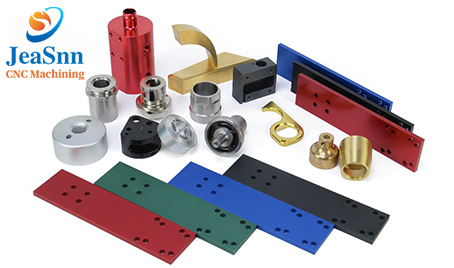
What Parts Can Be Made with 5-Axis CNC Machining?
5-axis CNC machining is widely used across Industries where complex geometries, precision, and machining efficiency are important.
Aerospace components: Aircraft structural parts, turbine components, brackets, and complex aluminum housings.
Automotive parts: Engine components, suspension parts, transmission housings, and precision prototypes.
Medical components: Surgical instruments, medical device housings, and precision components for medical equipment.
Industrial equipment: Pump components, valve bodies, mechanical housings, and precision tooling.
Energy components: Turbine parts, specialized mechanical components, and complex equipment structures.
The ability to machine multiple surfaces and intricate features makes 5-axis CNC machining a practical solution for a wide range of custom manufacturing applications.
When Should You Choose 5-Axis CNC Machining Services?
5-axis CNC machining services are particularly valuable when your project involves parts that are difficult to manufacture using conventional machining methods.
You may benefit from 5-axis CNC machining when:
Your component has complex curved surfaces or organic geometries.
The part requires machining on multiple faces or at different angles.
You need angled holes, undercuts, or difficult-to-access features.
Multiple setups would otherwise be required to complete the part.
Your project requires high dimensional accuracy and consistent quality.
You want to simplify part geometry or reduce machining operations.
For less complex components, 3-axis machining may offer a more economical solution. A reliable CNC machining supplier can evaluate your CAD model, material, tolerance requirements, and production volume to recommend the most suitable machining process.
Custom 5-Axis CNC Machining Services for Precision Parts
Choosing an experienced 5-axis CNC machining manufacturer is essential for producing complex parts with reliable quality and efficient lead times. Beyond machine Capabilities, machining expertise, programming skills, material selection, tooling strategies, and quality control all influence the final result.
At CNC Parts China, we provide custom 5-axis CNC machining services for customers requiring precision-machined components with complex geometries and demanding specifications. Our machining capabilities support custom parts production based on customer drawings, CAD models, and project requirements.
Whether you need prototypes, customized mechanical components, or precision parts for industrial applications, our team can help evaluate your design and machining requirements to develop a suitable manufacturing solution.
Contact us to discuss your project, upload your CAD files, and request a quote for custom 5-axis CNC machining.
FAQs About 5-Axis CNC Machining
How does a 5-axis CNC machine move?
A 5-axis CNC machine moves along three linear axes, X, Y, and Z, while using two rotational axes to tilt or rotate the cutting tool or workpiece. These movements allow the machine to access multiple surfaces and complex angles during machining.
Is 5-axis CNC machining better than 3-axis machining?
5-axis CNC machining is better suited for complex parts requiring multiple machining angles, intricate surfaces, or fewer setups. However, 3-axis machining can be more economical for simple parts with straightforward geometries. The best option depends on the part design, tolerances, and production requirements.
What is the difference between 3+2-axis and simultaneous 5-axis machining?
3+2-axis machining positions the workpiece or cutting tool using two rotational axes before performing machining operations along the three linear axes. The rotational axes typically remain fixed during each cutting operation.
Simultaneous 5-axis machining allows all five axes to move in coordination during cutting, making it suitable for continuously changing surfaces, complex contours, and advanced machining applications.
Is 5-axis CNC machining more expensive?
5-axis CNC machining can have higher machine costs and programming requirements than conventional 3-axis machining. However, it may reduce total manufacturing costs by minimizing setups, shortening machining time, reducing fixture requirements, and improving production efficiency for complex parts.
What materials can be machined using 5-axis CNC machining?
5-axis CNC machining can process a wide range of materials, including aluminum, stainless steel, carbon steel, titanium, brass, copper, and engineering plastics. Material selection depends on the part's mechanical properties, application, dimensional requirements, and machining strategy.
What industries use 5-axis CNC machining?
5-axis CNC machining is commonly used in aerospace, automotive, medical, industrial machinery, energy, robotics, and precision engineering industries. It is especially valuable for manufacturing complex components that require precise tool positioning and multi-surface machining.