




 English

Industrial work, construction sites, manufacturing plants, and electrical and automotive automation are all inherently dangerous work environments. Your workers and equipment need reliable protective devices that withstand rugged conditions in all situations and perform consistently. Accuracy and durability are fundamental to safety components; they are made of high-precision mechanical components including metal housings, brackets, bushings, shafts, connectors, and fasteners.
As safety systems have developed over the years, the hardware, off-the-shelf, increasingly does not fit. CNC machining allows us to produce specific pieces that make up the hardware for custom applications.
Even if you've got all the proper sizes, safety-critical elements require added engineering validation. Material strength, corrosion resistance, stress limitations, tolerances, floor finish, and intense inspection procedures are all crucial. This manual highlights primary CNC components, alloy options, performance standards, machining processes, and high-quality control. These production tips and tips support engineers in developing additional reliable, repeatable industrial safety hardware, emergency kits, and personalized mechanical safety assemblies.
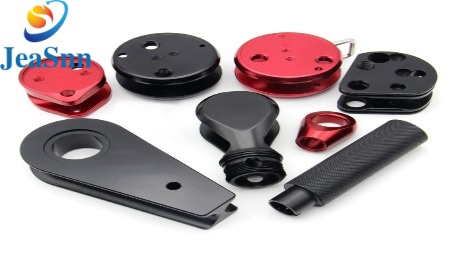
1. Why Are Precision CNC Parts Important for Safety Equipment?
Parts of safety equipment could harm the people operating them, cause production to stop or facilities to be damaged, and must be manufactured to very tight functional specifications.
Brackets, shafts, fasteners, and connectors are subjected to vibration, impact, and cyclic stress. Can be CNC machined to precision mechanical and dimensional specifications to maintain structural integrity.
Exact fit & durable: Safety devices have multiple parts that work together. CNC machined hole positions, threads, and shafts assure components fit. Custom washers, screw-bushings and standoffs go far to overcome size limitations of off-the-shelf fasteners.
Corrosion resistance for rugged environments: Safety equipment frequently encounters moisture, chemicals and outdoor environments. Choosing the right corrosion-resistant material involves considering load, environment and lifespan, with stainless steel, aluminum alloys and engineering plastics all providing high corrosion resistance.
Consistent batch-to-batch quality: Consistency from one batch to the next is essential for safety products. CNC manufacturing is highly repeatable, and use of standard inspections makes sure all final parts meet drawing specifications.
2. Essential CNC Machined Parts for Safety Equipment
Custom CNC mechanical hardware for a variety of safety equipment applications.
Aluminum housings and protective enclosures: Most often 6061/6061-T6 by CNC milling. Protect internal electrical and mechanical components for sensors and control units; require reasonable hole dimensions, uniform wall thickness, flat seal surfaces, and a qualified surface finish.
Stainless steel mounting brackets: Our 304 or 316 stainless steel mounting brackets hold up to vibration and outdoor use. Custom hole patterns and framing sizes are machined to mount safety assemblies securely.
Shoulder screws, lock fasteners and special studs are common. Accurate threads, strength of material, and the right type of locking design provide a strong connection even in the face of vibration.
Precision shafts and pins: Manufactured by CNC turning for locking, hinge, and pivot systems. Diameters and concentricity of end bearings are strictly controlled to ensure transmission of force.
Bushings and spacers: Turned cylindrical parts maintain mating part orientation and also set the fixed spacing between coupled parts, with close length, ID and OD tolerances.
Brass electrical connectors: Brass is highly corrosion-resistant and a good conductor, so it is the perfect material for electrical connectors that have a threaded connector or terminal; appropriate electrical standards are required.
For extremely lightweight, high-strength scenarios. It has the best performance, but is expensive and difficult to machine, so material selection should follow actual engineering requirements.
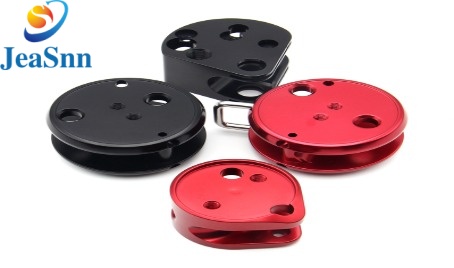
3. Material Selection for Custom CNC Safety Equipment Parts
Selection of materials affects the strength, weight, corrosion resistance, wear performance, and the cost of safety components.
Aluminum alloys: 6061, 7075, and other grades offer high strength-to-weight ratio and machinability; grade to anodize. Used extensively for protective enclosures, brackets and support plates.
Stainless Steel: 303, 304, 316 and 316L all offer proven corrosion resistance. 303 is recommended for precision turned pins; 304 for brackets; 316/316L for external fittings/connectors.
Carbon & alloy steel: 1045, 4140, and 4340 can be subject to a heat treatment process to increase their hardness. Their strength is useful for heavy-duty shafts, pins, and structural components that must resist wear.
Brass: It has high conductivity and machinability, suitable for electrical terminals, threaded fittings, and precision fittings.
Known plastics: POM and PTFE are suitable for insulation, sliding, and low-friction applications. Ensure the temperature, load, and flame-resistance parameters are tested prior to application.
4. Key Performance Requirements for CNC Machined Safety Components
The performance standard for safety parts varies depending on their application. Engineers must explain critical dimensions, loading conditions, environment, and assembly needs before manufacturing.
Dimensional accuracy and tolerances: Precision on shafts, holes, threads, and mounting positions ensures correct fitting. JeaSnn can achieve a ±0.005mm tolerance on qualified features, but choose a tolerance according to the actual functional requirement to prevent increasing machining costs.
Mechanical strength and bearing capacity: Safety elements work under static load, dynamic force, cyclic force, and vibration. They can be tested for tensile strength, impact toughness, and other indicators. Material certificates and mechanical tests are required, and full-device tests must be completed according to relevant standards.
Corrosion and Wear Resistance: Corrosion creates softer parts & destroys the threads. For corrosive environments, use 316 stainless steel, anodizing, or coatings. For all moving, wear-friction parts, make sure they have sufficient surface hardness.
Thread specifications, engagement length, and torque control are key factors. For vibration working conditions, anti-loosening designs like lock nuts are a must.
Surface finish and edge quality: Burr-free, smooth edge surface and consistent surface finish to protect users from injury and to minimize friction and ensure stable sealing performance.
5. CNC Machining Processes for Custom Safety Equipment Parts
The process used is dependent on part geometry, material, batch size, and tolerances.
CNC Milling: Supports components with flat faces, cutouts, grooves, and mounting holes, such as aluminum protective shells, stainless steel brackets, and structural connectors. Multi-axis milling eliminates multiple fixturings for complex profiles.
CNC Turning: Designed for workpieces with a cylindrical shape such as shafts, pins, bushings, threaded studs and spacers. It provides stable control over diameter, length, concentricity, and surface quality to precision fasteners and shaft components.
CNC Swiss Machining: Built for small-diameter complex components such as small pins, small shafts, and small threaded fittings. It provides the dimensional precision and high throughput that small precision hardware requires.
5-Axis CNC Machining: Perfect for parts with angled surfaces and complex features on several sides. Reduce clamping-related accuracy errors, enhance positioning accuracy and tolerances, and create housings and customized structural brackets.
Screw Machining & Assembly: For production and assembly of custom screws, nuts, and small pins. We offer secondary operations such as deburring, heat treat, plating, and inspection. Our one-stop machining and assembly service takes away the hassle of matching components.
6. Quality Control for Custom CNC Safety Equipment Parts
Robust QC is critical to guarantee CNC safety parts comply with customer specs. Systematic inspection covers material traceability, dimensional checks, surface condition, and batch stability.
Material inspection and traceability: Confirm the right alloy grade before production. MTCs, chemical and mechanical test reports, batch numbers and heat treatment records are provided as agreed for safety-critical projects.
Dimensional inspection: Critical features are measured with calipers, micrometers, thread gauges, optical testers and CMM. The inspection frequency is set based on part risk level, order quantity and client demands.
Surface quality inspection: Check for burrs, scratches, cracks and machining flaws. Coating thickness and appearance are verified for anodized or plated components.
Process control and batch consistency: Standardized drawings, tool monitoring, stable fixturing, fixed machining parameters and first-article plus in-process checks reduce dimension deviation, with full inspection records retained.
Quality management system: JeaSnn holds ISO 9001:2015 and IATF 16949:2016 certifications. These support process control but do not replace product safety approvals like CE or UL. The end equipment manufacturer is accountable for full product compliance with relevant standards.
7. Common Manufacturing Challenges and Solutions
Manufacturing precision CNC components for safety equipment comes with multiple technical risks.
Improper material selection: Causes inadequate strength or poor corrosion resistance. Evaluate working conditions thoroughly to pick suitable materials at the design stage.
Large dimensional deviation: Results in assembly mismatch. Adopt stable machining parameters and complete inspection procedures.
Thread flaws: Lead to unreliable fastening. Use qualified cutting tools and carry out dedicated thread checks.
Burrs on parts: Bring risks during assembly and handling. Add deburring and edge finishing as standard processes.
Surface corrosion: Shortens component service life. Choose proper base alloys and protective surface treatments.
Shaft misalignment: Triggers mechanical instability. Strictly control concentricity and runout tolerance.
Unstable batch quality: Creates inconsistent assembly. Enforce process control and batch-by-batch inspection.
8. Custom CNC Machined Safety Equipment Parts by JeaSnn
Choosing a skilled CNC supplier is vital for industrial safety equipment developers. JeaSnn Hardware delivers OEM & ODM precision metal and plastic parts for safety, automotive, medical, robotics, and machinery sectors.
Custom aluminum parts: Protective housings, brackets, covers, and connectors from 6061, 6061-T6, 7075, and other aluminum grades.
Custom stainless steel parts: Shafts, pins, threaded connectors, fasteners, and bushings in 303, 304, 316L, 17-4 PH, and more grades.
Custom fasteners: Made-to-print hex nuts, shoulder screws, studs and special machine screws.
Custom Shafts & bushings: Turned precision shafts, sleeves, spacers and standoffs with tailored dimensions and surface finishes.
Comprehensive Capabilities: CNC milling, turning, Swiss machining, 5-axis machining, prototyping and assembly. Surface treatments include anodizing, passivation, plating and heat treatment.
Backed by over 20 years of precision hardware experience, JeaSnn handles projects from prototype, small batch to mass production. Its engineers conduct DFM drawing reviews and suggest proper materials and processes, aiming to supply stable CNC components that satisfy specs, boost production efficiency, and lower costs.
9. How to Request a Quotation for Custom Safety Equipment Parts
Full technical details enable accurate RFQ evaluation for safety CNC parts. Prepare these documents and information for inquiry:
2D drawings with dimensions, tolerances, threads and geometric tolerances; 3D CAD files in STEP, STP or DWG formats.
Clear specs of material, surface finishing, order quantity and key performance demands such as load and sealing fit.
Special inspection requirements including material certificates, test reports and traceability rules, as well as service conditions like vibration, humidity and chemical exposure.
Samples or draft designs are also acceptable for our manufacturability assessment.
Conclusion
Custom CNC components underpin the structural stability, assembly precision and reliability of safety equipment. All parts, from aluminum housings and stainless brackets to shafts, fasteners and brass connectors, must meet functional design standards.
Quality output relies on proper material selection, tight tolerance control, mechanical performance, anti-corrosion properties, and standardized inspection. JeaSnn supports diverse safety part manufacturing via milling, turning, Swiss and 5-axis machining. We offer wide material choices and flexible OEM/ODM service to deliver custom metal and plastic components as per your drawings.
Contact JeaSnn Hardware for Custom CNC Machined Parts
Looking for a reliable manufacturer of custom CNC Aluminum Parts, stainless steel components, precision shafts, bushings, or customized fasteners for safety equipment?
JeaSnn Hardware welcomes OEM and ODM inquiries. Send us your engineering drawings, CAD files, or product samples for technical evaluation and quotation.
Website: https://www.cncpartschina.com/
Email: engineer@cncpartschina.com
Phone / WhatsApp: +86 189 9805 7602
Send us your drawings today. Our engineering team is ready to help manufacture precision CNC components for your industrial safety equipment projects.