




 English

The automotive industry calls for precision parts to ensure vehicle performance, longevity, safety, and efficiency in production. Engine components, transmission, suspension, fuel, brake, and exhaust parts require stringent conformance to dimensions and functions.
As automotive designs become more sophisticated, the demand for steady and reliable production of custom parts rises, leading car manufacturers to partner with dependable suppliers of custom components. CNC machining for automotive parts is a suitable choice as it ensures precision and repeatability while allowing for different types of Materials and complex geometries.
Custom CNC auto parts can be machined from your engineering drawings, material specifications, tolerances, and surface finish requirements.
The quality of parts doesn't only come down to achieving the correct dimensions but also manufacturing conditions like cutting feeds and speeds, choice of raw materials, degree of surface roughness, removal of burrs, and part inspection.
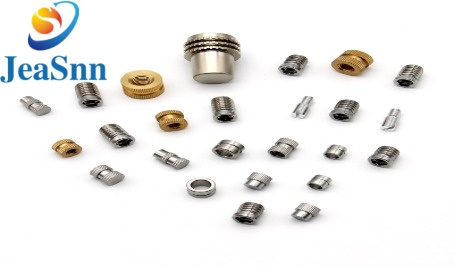
1. How Important Is CNC Machining For Automotive Parts Manufacturing?
From vibration and friction to thermal variations and cyclic loadings – automotive components experience various forms of mechanical/environmental influences while simultaneously requiring accurate positioning and interfacing stability. Precision and high-quality CNC processes realize the requirements of automotive component production, producing parts within the range of microns and achieving repeatability across multiple batches.
Even minimal dimensional discrepancies could affect the alignment, clearance, and interface of assemblies – components like precision shafts, bushings, dowel pins, and screws are made with precise CNC Turning/Milling processes from the automotive parts manufacturer to exact drawing specifications, often at tolerances of ±0.005 mm or even better.
The benefit of CNC is the consistent batch-to-batch quality, critical when customers request repeat orders for custom screws, shafts, brackets and fittings. It caters to different materials too: aluminium for lightness; stainless steel for corrosion resistance; brass for connectors; and high tensile alloy steel.
It also allows fast prototyping and effortless customization. Since the parts can be produced directly from CAD data with no need for custom molds, it's ideal for prototype validation, small batch production, bespoke parts, and selective mass production in automotive development.
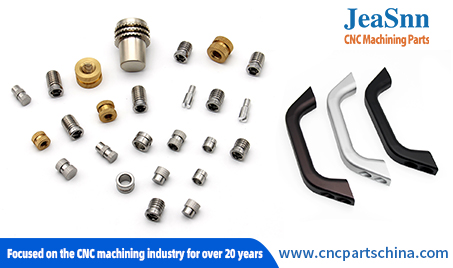
2. Automotive parts and applications typically made with CNC machining include
JeaSnn offers a variety of precision CNC machined auto parts, including custom-made shafts, bushings, fasteners, inserts, and other metal components for different automotive systems.
Suspension parts and components for shock absorbers such as bushings, sleeves, brackets, and mounting pins. They need to be strong and durable enough to withstand repeated loads and vibrations, and have excellent surface finishes – CNC turning would be used to make these cylindrical components, while CNC milling can be employed for making brackets and other complex shapes.
Components like engine timing covers, brackets and spacers are made of aluminum (commonly 6061 or 6082 for light weight), machined to close tolerances and sealed well. Other components such as fuel system fittings, adapters or valve components can be in brass, stainless or aluminium; compatibility of the material with the fuel and seal effectiveness is the most important consideration.
Precision pins, bushings and other hardware such as these used in brakes and other critical safety assemblies are generally produced and specified for material strength, wear resistance and corrosion resistance that goes well beyond the requirements of their surface machining.
For shafts that transmit power in vehicles, tight runout, concentricity, and straightness tolerance are required. Spacer rings and bushings to either support a shaft or maintain a gap can be fabricated from aluminum, brass, stainless steel, and POM. Customized thread components such as a stainless steel nut or a brass threaded insert can also be produced by CNC turning and screw machining to fulfill specified thread and mechanical properties.
3. Main CNC Manufacturing Methods for Automotive Parts
Automotive parts adopt tailored CNC processes to balance accuracy, surface finish, productivity, and cost.
CNC turning is the primary choice for cylindrical parts such as shafts, bushings, pins, and threaded fasteners. It precisely controls diameter, thread, groove, and concentricity; paired with automatic screw machining, it delivers high efficiency for mass production of small precision metal auto components.
CNC milling works for parts with planes, cavities, slots and irregular structures, including engine covers, mounting brackets, housings and sensor bases. Multi-axis milling cuts re-clamping times and boosts positional precision.
CNC Swiss machining excels at slender, small-diameter precision pieces like tiny pins, miniature shafts, brass inserts and compact fittings, ideal for high-volume runs with strict tolerance demands.
5-axis CNC machining enables multi-directional cutting for intricate parts with angled surfaces, such as special housings and complex connectors, securing accurate feature alignment with fewer setups.
CNC turn-mill integration combines turning and milling in a single operation, perfect for threaded shafts, adapters, and mixed-feature fittings. It lowers repositioning errors and raises overall processing efficiency.
4. CNC Machined Parts Material Selection for Automotive CNC Machined Parts
The choices of materials affect the weight, the strength, the price, the service life, and the durability of the automobile parts; they must match the use of the parts and their working conditions.
Aluminum: 6061 is selected due to its light weight, good machinability, and corrosion resistance, and is applied for housings, brackets, covers, etc.; high-strength aluminum 7075 is suitable for special structural parts. Both could be anodized for better corrosion resistance and appearance.
Generally, stainless 303 is selected for turned parts requiring excellent machinability. 304 is a general stainless fastener material, and 316 is used for parts needing special corrosion resistance, for example, shafts, nuts, bushings, connectors, etc.
Brass C360 – Possessing good machinability in conjunction with reasonable electrical conductivity and corrosion resistance, C360 Brass is a good choice for electrical connectors, threaded brass inserts, and other custom precision components with a custom thread, groove, and profile.
For parts such as shafts and other mechanical components, 1045 carbon steel offers a balance of strength and ease of machining; 4140 alloy steel can be heat treated to achieve a higher hardness level, making it appropriate for parts subjected to heavy loading.
Due to its wear resistance and dimensional stability, POM is often utilized for parts such as bushings and spacers.
5. Standards for Surface Finish of CNC Automobile Components
The finishing and de-burring of components has an impact on part lifetime and its corrosion properties; a part that has the right size but incorrect surface finish may fail to seal properly or have an inadequate life span.
The required surface roughness (Ra) depends on the use of the surfaces. Generally, surfaces intended for fitting may have a standard finish, whereas the surfaces that are to be engaged, i.e., shafts, sliding, rotating parts, and seals, may require a more specific and finer Ra. It is not possible to specify a uniform Ra over a whole component and therefore critical surfaces should be identified separately.
Debris from slots and holes (through, cross and in the threads) might block assembly, or scratch other parts; chamfering, brushing, deburring, polishing and the like processes are usually carried out.
The appropriate surface finish depends on the substrate and application. There is a wide range of surface finishes that could be applied, such as anodising to protect aluminium; passivating to improve corrosion resistance of stainless steels; black oxide and oil for steel parts; electroplating; powder coating; or polishing to give smooth, decorative surfaces. A surface finish will alter the part dimensions and so coating thickness, dimensional changes and compatibility should be considered when choosing a surface finish.
6. Quality Control in Automotive CNC Machining
Norton's quality procedures for customized CNC car parts range from raw material control to dimensional inspections to final part inspections.
Raw material inspection involves material certifications and test reports, while part inspections may include, but are not limited to, dimensional checks using calipers and micrometers, thread gauge checks, as well as CMM inspections.
First Article Inspection (FAI) is typically performed before production starts to validate the first part or a part from a new tool or a new process. Tool wear, machine calibration, in-process inspection, and finished goods inspection reports are part of production controls.
JeaSnn holds IATF 16949:2016 and ISO 9001:2015 certification; however, certification does not equal safety-critical part approval, as customer-specific and product validations are always necessary.
7. Challenges faced in the CNC Production of Automotive Parts.
Production of automotive CNC components has some usual risks that affect fit, function, and part life.
Material selection to properly support function and environment; Ensure proper selection and specification of material based on end-use requirements from the outset to avoid component failure; Problems with part tolerance lead to parts not fitting; processes should be controlled and critical dimensions identified and controlled.
Excessive burrs will cause problems for mating parts; thus proper deburring and edge finishing are essential. Incorrect surface finish, too high or too low, will impact friction, sealing, and wear; Thread errors will impact thread engagement and performance.
It is imperative to interact with buyers at an early stage. Sharing details such as drawings, specifications of materials, and functional requirements with the machine shop prior to production enables them to choose the optimal machining strategy and minimize risk.
8. Why choose JeaSnn for Custom CNC Automotive Parts?
CNC automotive components provider with an experienced technical and quality team that could guarantee quality, on-time delivery, and a stable parts supply. JeaSnn Hardware has been providing custom CNC metal and plastic machining parts (OEM and ODM) for over 20 years to Industries such as automotive, medical, electronics, and automated equipment.
From aluminium automotive CNC parts such as housings, brackets, suspension components, and stainless steel bolts and nuts to brass automotive CNC parts such as threaded inserts to automotive CNC parts like precision shafts, bushings, pins, and many other custom-made automotive CNC components. JeaSnn offers the full suite of machining Capabilities, including milling (up to 5-axis), CNC turning, Swiss machining, screw machining, and assembly for prototyping to large volume production.
With more than 50 engineering materials available to machine, such as 6061 / 7075 aluminium, 304 / 316 / 17-4PH stainless steel, brass, alloy steel and engineering plastics, JeaSnn can deliver a full range of automotive CNC components. Surface finish options such as anodising, passivating, plating, powder coating and many others are available.
JeaSnn provides your custom automotive CNC parts from prototype to low and high volume series. Being ISO 9001:2015 and IATF 16949:2016 certified, JeaSnn delivers the custom CNC automotive parts per your specifications and standards.
9. Request a Quote for Custom Automotive CNC Components
To facilitate providing you a more accurate estimate and streamline communication, please collect the following information before raising your RFQ.
Please supply 2D engineering drawings with dimensions, tolerances, and thread details, plus 3D CAD files in STEP, STP or DWG format. Please specify the grade of material, finish (e.g., anodised, passivated), quantities (prototypes, batch and annual).
Conclusion
CNC machining is vital for custom automotive parts that demand tight tolerances, stable quality, and dependable mechanical performance. It covers diverse auto components, including aluminum engine housings, suspension parts, stainless steel shafts, precision bushings, brass inserts, and bespoke fasteners.
Selecting proper machining processes, materials, and surface treatments is key to meeting functional targets. CNC turning, milling, Swiss machining, 5-axis and screw machining each offer unique strengths for different parts.
JeaSnn Hardware delivers custom CNC services for automakers, OEM suppliers, and engineering firms. With flexible production, broad material choices, and certified quality systems, we help clients convert engineering drawings into qualified precision machined components.
Website: https://www.cncpartschina.com/
Email: engineer@cncpartschina.com
Phone / WhatsApp: +86 189 9805 7602
Have a custom automotive component project? Contact JeaSnn today and request your CNC machining quotation!