




 English

In the manufacture of medical devices, the building blocks of high-quality metals and plastics are precise, stable, corrosion-resistant, with tight tolerances and a long lifetime. Stainless steel has become a foundational Material in designing surgical tools, laboratory equipment, and diagnostic appliances.
With the development of new medical technology, the need for precision stainless steel components with complex profiles, close tolerances, and custom finishes increases. When a part is so specialized that it cannot be ordered from common stock parts, CNC Machining is the answer.
With turning, we can produce precision shafts, bushings, fasteners, connectors, and housings to your engineering drawings. Material selection and tolerances are critical, as stainless steels are not all equal, for corrosion resistance, hardness, and machinability. For medical components, we also supply them with laser-etched serial numbers, high surface finish requirements, cleanliness standards, tight dimensional tolerances, and material traceability.
Topics covered in this guide include: Frequently used medical stainless steels, CNC tolerances, fabrication processes, and QC best practices to improve quality and efficiency for your medical component development.
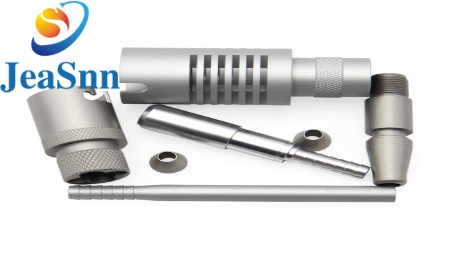
1. Why We Use Stainless Steel For Medical Device Manufacturing
Stainless steels are used in an extremely wide variety of applications due to their good overall characteristics, including excellent corrosion resistance, strength, ductility, and workability. Carefully specified stainless steel items can typically withstand many processing, handling, and cleaning cycles.
Corrosion-resistant stainless steel containing high amounts of chromium will form an oxide film that is resistant to moisture, disinfectants, and other chemical cleaning products. This resistance can be further improved by the addition of molybdenum to grades 316 and 316L.
When properly selected and heat-treated, it has good strength and wear resistance. Precision shafts, threaded accessories, instrument frames, special CNC hardware.
In addition to providing strength, that little extra weight imparted to fabricated stainless steel parts increases their durability.
The surface finish can be altered through polishing, passivation, brush treatment, and other processing steps to achieve the utmost cleanliness, corrosion resistance, and surface condition to meet sterilization and operating requirements.
2. Types of Stainless Steel Most Often Used in Medical Device Parts
Choosing the correct stainless steel grade alloy material for the application when working with custom CNC machined stainless steel medical components is essential, as each grade alloy will have a number of differing characteristics.
Alloy 304 stainless steel: General-purpose stainless steel, austenitic, offers reasonably good corrosion resistance, is easy to form and weld, can be supplied in all commercial forms and machines successfully with suitable cutting data. Generally used in any applications requiring lower to moderate corrosion resistance such as enclosures, brackets, frames, supports and precision components.
316 stainless steel: with molybdenum for even better corrosion resistance to chloride than 304. Suitable for fittings and accessories for the laboratory, parts that contact liquids, precision couplings and hardware that will be exposed to standard disinfectants and wet surroundings.
316L stainless steel (a low carbon form of 316 to prevent intergranular corrosion after welding, with a more consistent corrosion behaviour.) Commonly used for fluid connectors, shafts and instrument hardware. NB: Standard 316L is not implant grade as standard and has to be approved for this.
17-4 PH: Condition heat-treated 17-4 PH is an age-hardenable stainless steel with a special high strength that has good corrosion resistance. It is used for parts that require high strength and are used under high load conditions, such as precision shafts, pins, connectors, and other instrument structure parts.
S303 stainless steel- ideal for CNC turning when items are threaded, small fittings & pins. Sulfur has been introduced to compromise the corrosion resistance of 304 & 316, so not recommended in harsh disinfectant conditions.
The grade is given by the component function, service environment, mechanical load, sterilization routine, and regulatory policies.
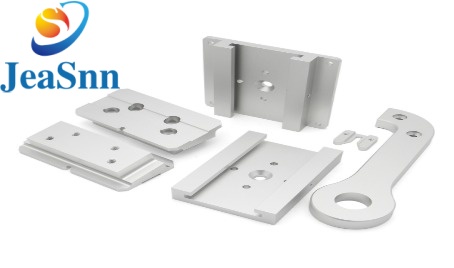
3. Made-to-Order Stainless Steel Parts Design Standards
Medical components have even more strict engineering specifications than you would typically see with industrial components. Those are the key features that can make or break a component with a CNC machine.
When it comes to Assembly and operation, your internal/external diameter, shaft, centre of hole, threads, and concentricity will need to have very tight tolerances. If CNC Machining is used, tolerances of ±0.01 mm can be achieved. Material, shape, inspection system and allowable maximum extent of high precision will all need to be considered.
Surface Roughness: Rds rough surface piles grease and dirt on the abnormal heat generated. For the targets of Ra 0.4mm and Ra 0.8 mm, the contact type, cleaning process, and industry indicators have also been listed, and the above surface requirements are achieved by polishing.
Geometric accuracy: For example, flatness, roundness, perpendicularity, parallelism and run-out all influence fit, seal and movement. Many complex medical applications can be verified with a CMM.
Drawings - examples here show the drawings that should be regarded as designs: the resulting details; Burr control and edges finish: Burrs on holes, threads and edges can cause assembly failures and particle generation. Drawing to define requirements for burr control and edges finish on the medical grade part.
Thorough elimination of all machining oil, metal shavings, and polishing media. Special treatment, handling and packaging of all parts for delicate medical applications.
4. CNC Machining Processes for Medical Stainless Steel Components
Machining is chosen according to the shape of the part, the degree of difficulty, the batch mode and the desired tolerances.
CNC Turning: great for round parts – precision shafts, pins, threaded fittings, bushings and sleeves. It offers good control over diameter, length and rotation and is therefore an excellent choice for producing shafts and round fittings.
CNC milling: Machine parts with three or five sides that have sophisticated profiles and features such as flat, hole, slot and cavity features. 3-axis, 4-axis and 5-axis milling are appropriate for more complex contours and require less re-fixturing. Frequently manufacture brackets, instrument frames, mounts and housings.
Swiss CNC machining: Affordable CNC parts manufacturing and machining. Small pins, Small connectors, Small Shafts & threaded fittings can be machined with one setup in order to save costs.
5-axis CNC machining: The ability to machine multi-sided parts with ramped surfaces. Fewer clamping procedures produce more efficiency and contribute to the retention of the part's geometric precision of the most complex medical devices.
Drilling and tapping: Produces precise threaded holes and assemblies. As the stainless steel work-hardens, it necessitates specific tools and settings to maintain the integrity of the threads, pin locations, and depth for dependable assembly.
5. Surface Finishing for Medical Grade Stainless Steel Parts
Surface finishing of parts can enhance corrosion resistance, appearance, quality, cleaning, and functional performance of stainless steel parts. The surface finishing options available for the CNC process are as follows:
Mechanical polishing: Used to polish the surface of the workpiece where high surface quality is required.
Passivation: When correctly carried out, it may lead to the growth of a passive film which prevents corrosion.
Electropolishing: Is an accurate removal of the surface material for the optimal finish and cleanliness required for medical grade.
Brush: Defines a uniform directional grain for the hardware specified.
Creates a matte finish and prepares the surface for additional processing.
Nickel or chrome plated: for this may be used in a very special functional need, strictly limited on the material and regulatory medical limits.
Choose the appropriate surface finish for the function of the part, cleaning and sterilisation cycle, and regulation. You can not have all the parts in the same surface finish.
6. QC / Inspection Standard
Our selection of material, control of quality, dimension inspection, surface inspection, and documentation are part of the integrity behind the high quality of all our custom CNC Stainless Steel Medical Components and Screw Machine Components.
Material test certificates, chemical and mechanical tests, batch numbers, and traceability documents shall be provided so that the grade of stainless steel used remains in accordance with the technical drawings. A programme of traceability shall be implemented on all medical projects prior to production.
Dimensional inspection: Use of calipers, micrometers, thread gauges, optical tester, CMM to compare part critical dimensions to drawings and acceptance levels.
The components are checked for burrs, sharp edges, scratches, tooling trails, polishing scratches, flaws, and bad passivation scratches. The surface is checked for surface roughness if required.
Traceability: Inspection report, Process records, Traceability records, etc. ISO 9001 and IATF 16949 cover process controls, not ISO 13485 or Medical Regulatory. Need to confirm the timing of the order for each project.
7. Custom CNC Stainless Steel Parts by JeaSnn
OEM/ODM suppliers want to work with quality organizations for precision medical components. JeaSnn Hardware is an OEM/ODM manufacturer of medical OEM/ODM precision metal and plastic parts.
We manufacture with SUS303, SUS304, SUS316, SUS316L, 420, 430, and 17-4 PH.
Product range: Custom machined stainless steel, precision shafts and bushings with tight tolerances, specialty fasteners and standoffs for mounts and assemblies.
Machining & finishing: CNC turning, milling, Swiss and 5-axis machining, prototyping and assembly. All common surface finishes can be applied to machined components, such as passivation, nickel, chrome, polishing, brushing, sand blasting.
Whether you require a small or large quantity, tooling validation or production quality, we'll meet your needs. We have over 20 years of experience manufacturing precision parts to ISO 9001:2015, IATF 16949:2016 standards.
Conclusion
Manufacture of custom stainless steel medical components: custom-mixed material, precision machining and accurate tolerance, surface finishing, and meticulous quality control are all required when making stainless steel medical components.
Corrosion resistance, machinability, and mechanical properties of stainless steel grades 304, 316, 316L, and 17-4 PH are selected according to the application and service requirements of the part.
CNC turning, milling, Swiss, and 5-axis machining, we can produce any type of precision shaft, bushing, connector, fastener, or structural hardware.
JeaSnn offers custom CNC stainless steel machining services according to customers' drawings and samples. We are capable of handling the entire process from the new material & product design and prototyping to high-volume production.
Contact Jea Snn Hardware for Custom CNC Stainless Steel Parts
Need a custom stainless steel medical equipment parts manufacturer? Or precision CNC machined shafts, bushings, or any custom metal parts?
Jea Snn Hardware accepts OEM and ODM orders. Please send us your engineering drawings, CAD drawings, or samples for our engineering assessment and quotation.
Website: https://www.cncpartschina.com/
Email: engineer@cncpartschina.com
Phone / WhatsApp: +86 189 9805 7602
Send us your technical drawings today. Our engineering team is ready to help manufacture precision stainless steel components for your medical equipment projects.