




 English

Picking the correct Material is vital while designing CNC-machined components. Parts sharing the exact same geometry can behave quite differently in service, depending on the raw material chosen — aluminum, stainless steel, brass, POM, nylon, PTFE, or other engineered materials.
When OEM manufacturers, mechanical engineers, and product designers select raw materials, the decision extends well beyond merely choosing metal or plastic. The ideal material is assessed by a host of factors: mechanical strength, weight requirements, wear performance, operating temperature, chemical exposure, electrical properties, dimensional stability, machinability, and the overall component expense.
CNC Parts China offers custom CNC Machining for a broad spectrum of metals and engineering polymers, supporting prototype fabrication as well as volume production. Our available material portfolio covers aluminum, brass, copper, stainless steel, carbon steel, titanium, POM, PTFE, nylon, ABS, PC, PEEK, and additional high-performance engineering materials.
This guide compares the major material options and explains how to choose the right material for your custom material parts.
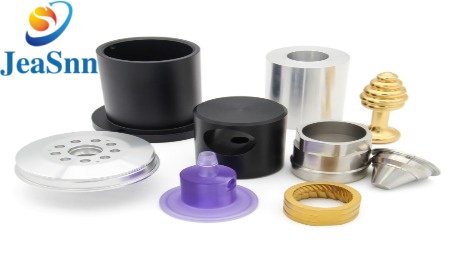
Best Metal Materials for CNC Machining
CNC machining stands out for fabricating precision metal components with intricate shapes and strictly managed tolerances.
CNC Parts China provides CNC fabrication for an extensive selection of metallic materials, including aluminum, stainless steel, carbon steel, brass, copper, titanium, and bronze.
1. Aluminum
Aluminum is widely favored when producing custom CNC metal parts.
We routinely machine multiple aluminum alloys: 6061, 6061-T6, 6063, 6082, 7075, 2024 and 5052.
It boasts low weight, good cutting performance, anti-corrosion capability, and stable mechanical characteristics.
When to pick aluminum
This material fits lightweight mechanical parts, automotive components, robotic assemblies, electronic casings, aerospace hardware, fixtures, support brackets and custom CNC enclosures.
6061 serves as the go-to grade for general precision custom parts. If a better strength-to-weight ratio is needed, 7075 will be the preferred option.
2. Stainless Steel
Stainless steel works perfectly for applications requiring corrosion protection, lasting durability, and solid mechanical strength.
The stainless steel grades regularly processed via CNC machining include 303, 304, 316, 316L, 420, 430 and 17-4 PH.
303 stainless steel is preferred for scenarios where easy machining is a primary concern.
304 delivers a well-balanced mix of corrosion protection and mechanical performance, making it a universal grade.
316 and 316L are specified for components operating in harsher, more aggressive working environments.
17-4 PH stainless steel is the material of choice whenever high strength and hardness are required.
For fabricators of custom stainless steel components, material selection needs to take more than just corrosion resistance into account. Machining complexity, tolerance demands, surface quality standards, and production volume all need to be evaluated as well.
3. Steel and Carbon Steel
Steel serves as a great candidate where high strength, durability and cost-effectiveness stand as key priorities.
We conduct CNC machining on mild steel, carbon steel, and alloy steel to fit different application scenarios.
Steel is commonly machined into machine parts, shafts, gears, fixtures, fasteners, structural components, and industrial assemblies.
Despite having a higher density than aluminum, steel boasts greater strength and outstanding wear-resistant properties.
CNC Parts China offers custom steel machining services, covering simple designs as well as intricate parts with strict tolerance requirements.
When specifying steel grades for custom workpieces, engineers need to evaluate factors such as target strength, hardness, heat treatment needs, corrosion demands, and actual service conditions.
4. Brass and Copper
Brass and copper are ideal choices for applications requiring outstanding electrical conductivity, thermal transfer performance and excellent machinability.
Brass
Common CNC-machined brass products include connectors, electrical components, bushings, valves, pipe fittings and precision hardware.
With its superior cutting characteristics, brass works perfectly for complex CNC fabricated metal parts.
Copper
Copper delivers exceptional electrical and thermal conductive performance.
It is widely selected for electrical assemblies, heat sinks, heat exchangers, high-frequency elements and conductive workpieces.
CNC Parts China produces precision CNC copper components to serve electrical, electronics, RF, heat sink and heat exchanger projects.
5. Titanium
For applications that demand remarkable strength-to-weight characteristics, corrosion resistance and premium mechanical performance, titanium is an excellent material selection.
It is widely deployed in aerospace assemblies, medical devices, high-end mechanical components, automotive parts and chemical processing apparatus.
Titanium is more difficult to process via CNC machining relative to aluminum and brass.
For custom CNC titanium part projects, it is vital to evaluate machining workflows, tool selection, tolerance standards, and production volumes comprehensively.
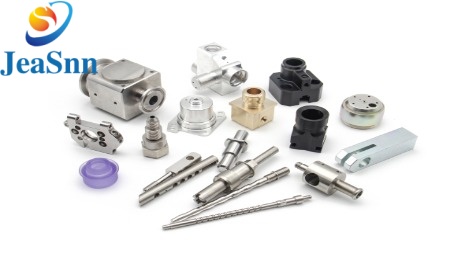
Best Engineering Plastics for CNC Machining
Engineering plastics are gaining popularity as metal substitutes within CNC fabrication.
CNC Parts China supplies a wide range of options such as POM, PTFE, ABS, PC, PA (nylon), PVC, HDPE, PEEK, and more engineering-grade plastics.
1. POM / Acetal / Delrin
POM ranks among the most widely adopted engineering plastics for precision CNC machining.
Its key properties include:
Low friction coefficient
Excellent wear resistance
High rigidity
Reliable dimensional stability
Superb machinability
Strong chemical resistance
POM is an excellent choice to produce bushings, rollers, gears, guide rails, spacers, sliding parts, and precision mechanical components.
Custom POM components make a great substitute for moving assemblies where metal-on-metal contact and friction must be minimized.
2. Nylon / PA
Nylon offers a favorable combination of mechanical strength, impact toughness, wear resistance and low density.
PA6 and PA66 are the grades most often selected for CNC projects.
CNC-machined nylon components are regularly utilized for bushings, rollers, gears, guides, spacers, fixtures and mechanical supports.
Compared with rigid metals, nylon suits parts requiring a certain level of flexibility and good impact resistance.
Custom rotary nylon parts including shafts, rings, sleeves and bushings can be manufactured via CNC Turning with tight dimensional accuracy..
3. PTFE / Teflon
PTFE is famous for exceptionally low friction performance and superior chemical inertness.
It is widely used to produce seals, insulating elements, bushings, chemical apparatus, sliding parts and fluid control components.
Still, PTFE features lower hardness and dimensional traits that differ from metallic materials.
When developing custom PTFE workpieces, engineers must take creep, thermal expansion, working temperature, and dimensional stability into consideration.
4. PEEK
PEEK belongs to the family of high-performance engineering plastics.
It features an outstanding combination of high-temperature tolerance, mechanical robustness, wear resistance, chemical inertness and stable dimensional performance.
PEEK is widely specified for rigorous projects within industrial, medical, aerospace and electrical sectors.
Due to its premium material cost, PEEK is typically chosen only where its superior functional merits can offset the extra expenditure.
5. ABS and Polycarbonate
ABS is an economical engineering plastic featuring decent impact resistance and easy machinability.
Typical use cases cover prototypes, housings, protective covers, enclosures, and functional test samples.
Polycarbonate boasts exceptional impact resistance and is selected for applications requiring great toughness plus optical transparency.
Both materials can be machined into custom plastic parts via CNC processes.
Material Selection Checklist
1. Mechanical Load
Evaluate the types of loads the component will sustain: tension, compression, bending, shear, impact, and cyclic repeated loading.
A shaft bearing substantial loads generally calls for a different material compared to a light-duty electronic spacer.
2. Temperature
Working temperature plays a vital role in material selection.
Metals usually retain their mechanical properties at higher temperatures than most engineering plastics.
Nevertheless, high-performance plastics including PEEK are available options for high-temperature operating environments.
3. Chemical Exposure
Chemical compatibility assessment is necessary when parts are exposed to oils, solvents, acids, cleaning chemicals or other substances.
PTFE and a range of engineering plastics demonstrate excellent resistance to chemical corrosion.
4. Friction and Wear
For sliding assemblies, low-friction materials such as POM, PTFE, or specific nylon grades help cut down wear loss.
Metal alloys tend to be a more fitting solution for heavily loaded wear-resistant components.
5. Weight
If lightweight design is required, aluminum and engineering plastics have advantages over steel.
This feature is particularly critical for robotics, portable machinery, aerospace applications, and automated equipment.
How to Choose the Right Material for Your Custom Parts
Selecting the ideal material for custom CNC machined parts relies on a standardized, comprehensive evaluation process to match practical application needs.
Firstly, it is essential to define the core application, fully clarifying the specific functional role of the custom component in the overall equipment assembly.
Secondly, evaluate the full operating environment of the component, taking into account critical working conditions including temperature fluctuations, humidity levels, chemical exposure, outdoor weathering, mechanical loads, frictional contact, and electrical specifications. Based on these environmental constraints, define core performance criteria such as structural robustness, weight efficiency, corrosion and wear resistance, electrical insulation, thermal conductivity and dimensional consistency, so as to prioritize key material properties.
After determining performance demands, screen and compare qualified metal and engineering plastic materials. In addition to theoretical performance, material machinability cannot be ignored, as high-performance materials may pose machining difficulties and raise production costs. It is also necessary to pre-evaluate optional surface treatments; common processes like anodizing, plating, polishing, passivation, black oxide, and powder coating can effectively optimize metal parts’ usability and durability.
Finally, submit 2D drawings or 3D CAD models to professional CNC manufacturers. Suppliers will conduct an all-round manufacturability assessment, covering material adaptability, part geometry, tolerance standards, machining schemes, and production volume to ensure feasible, cost-effective, and high-quality production.
Conclusion: Choosing the Right Material for CNC Machining
For OEM producers, selecting proper materials for custom machined parts in the design phase helps elevate product performance and cut redundant manufacturing expenses.
Whether you need custom CNC metal parts, engineering plastic components, aluminum parts, stainless steel parts, POM bushings, PTFE components, precision shafts, screws, spacers, washers, or other custom precision parts, CNC Parts China can evaluate your drawings and help determine a suitable manufacturing solution.
Send your CAD drawing, material requirements, quantity, and application details to request a quotation for your custom CNC parts.