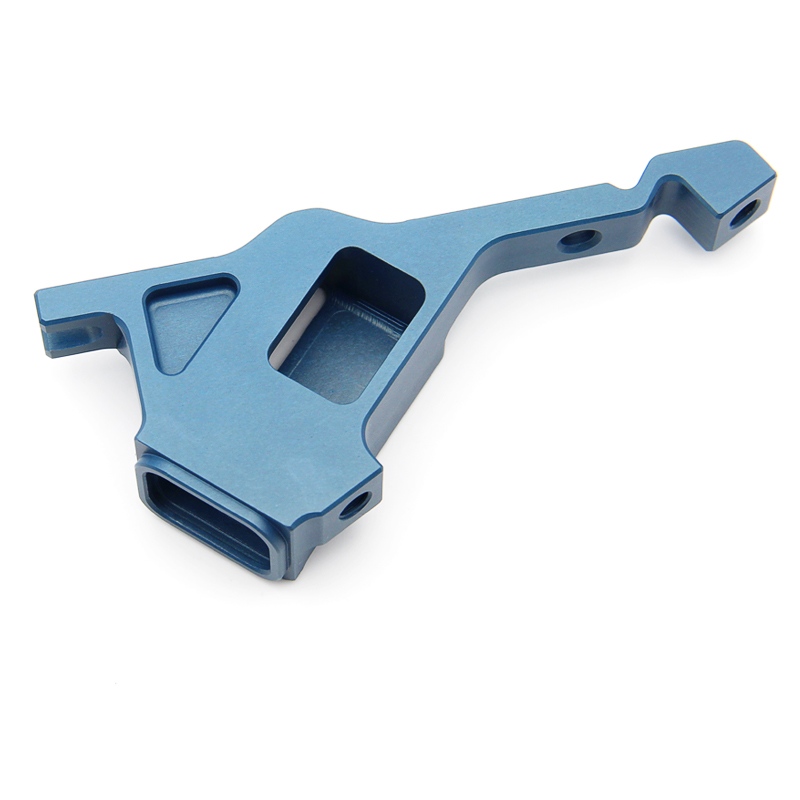


Aluminum parts manufacturing is widely used to produce lightweight, durable, and precision-engineered components for industries such as Automotive, aerospace, electronics, machinery, and industrial equipment. With excellent machinability, corrosion resistance, and a high strength-to-weight ratio, aluminum is an ideal material for a wide range of custom components.
As an experienced manufacturer, we provide custom aluminum parts manufacturing services for different designs, dimensions, and application requirements. From prototypes and small batches to volume production, our aluminum machining capabilities help customers obtain reliable parts with consistent quality and dimensional accuracy.
Aluminum parts manufacturing refers to the process of producing components from aluminum materials through machining, cutting, drilling, milling, turning, and other manufacturing processes.
Depending on the part design and production requirements, aluminum parts can be manufactured using different processes. CNC machining is commonly used when customers require complex geometries, tight tolerances, smooth surfaces, and repeatable production.
Our aluminum parts manufacturing service can support customized components based on customer drawings, CAD files, samples, or specific technical requirements.
We provide custom aluminum parts manufacturing for components with different shapes, sizes, structures, and functional requirements.
Our capabilities can include:
Custom CNC Aluminum Parts
Aluminum machined parts
CNC milled aluminum parts
CNC turned aluminum parts
Precision aluminum components
Aluminum housings and enclosures
Aluminum brackets and structural parts
Custom aluminum mechanical components
By selecting the appropriate aluminum material and machining process, manufacturers can produce components suitable for different mechanical and industrial applications.
CNC aluminum parts are manufactured using computer-controlled machining equipment to remove material and create the required component geometry.
CNC machining is suitable for aluminum because the material generally offers good machinability. It can be used to produce complex contours, holes, slots, threads, pockets, and other detailed features.
Our CNC aluminum parts manufacturing process can be used for both prototype development and production components, helping customers maintain consistent dimensions across multiple parts.
CNC milling is suitable for aluminum components with flat surfaces, pockets, slots, holes, and complex three-dimensional features.
It can be used to manufacture:
Aluminum brackets
Machine components
Mounting plates
Housings
Fixtures
Structural components
CNC turning is commonly used for cylindrical or rotational aluminum components. It can produce features such as external diameters, internal bores, threads, grooves, and chamfers.
Typical applications include shafts, sleeves, connectors, fittings, and other precision aluminum components.
Aluminum offers several characteristics that make it suitable for custom parts manufacturing.
Aluminum has a relatively low density compared with many commonly used metals. This makes aluminum parts suitable for applications where reducing component weight is important.
Aluminum can generally be machined efficiently using CNC milling and turning processes. This makes it suitable for producing complex aluminum machined parts with different geometries.
Aluminum naturally forms a protective oxide layer on its surface, providing useful corrosion resistance in many environments. Additional surface treatments can also be used when specific appearance or surface performance is required.
Aluminum provides a useful combination of strength and low weight. This makes it suitable for structural and mechanical components where weight reduction and mechanical performance both matter.
Custom aluminum components are used in a wide range of industries.
Common applications include:
automotive components
Aerospace components
Industrial machinery
Automation equipment
Electronic equipment
Robotics
Medical equipment
Consumer products
Communication equipment
Precision machinery
The specific aluminum material, machining process, tolerance, and surface finish can be selected according to the requirements of the final application.
Customers can provide technical drawings, CAD files, 3D models, or samples for custom aluminum parts manufacturing.
Before production, important factors such as material selection, part geometry, machining method, tolerances, surface finish, and production volume can be reviewed to determine an appropriate manufacturing process.
This approach helps ensure that the finished custom aluminum parts meet the required functional and dimensional requirements.
Surface finishing can improve the appearance and surface characteristics of aluminum components.
Depending on the application, aluminum parts may be processed with different finishing methods, such as:
Anodizing
Powder coating
Painting
Polishing
Brushing
Sandblasting
The appropriate surface finish depends on factors such as appearance, corrosion resistance, surface requirements, and end-use environment.
As a professional aluminum parts manufacturer, we focus on providing customized manufacturing solutions for different industrial applications.
Our service supports:
Custom aluminum component manufacturing
CNC aluminum machining
Prototype and production parts
Parts manufactured from customer drawings
Different aluminum part geometries
Customized surface finishing
Consistent production quality
Whether you need a small batch of prototypes or larger-volume production, our aluminum parts manufacturing service can be adapted to your specific requirements.
Aluminum parts manufacturing is the process of producing components from aluminum using processes such as CNC milling, CNC turning, drilling, cutting, and other machining methods.
CNC aluminum parts are aluminum components manufactured using computer numerical control machining equipment. CNC machining can produce precise and complex aluminum components based on CAD drawings or technical specifications.
Yes. Custom aluminum parts can be manufactured according to customer drawings, CAD files, 3D models, samples, dimensions, and application requirements.
Aluminum machined parts are commonly used in automotive, aerospace, electronics, automation, robotics, industrial machinery, medical equipment, and other applications.
Depending on the manufacturing requirements, aluminum parts can be finished through processes such as anodizing, powder coating, painting, polishing, brushing, and sandblasting.

JIESHENG HARDWARE is a professional manufacturer that focuses on customizing High- Precision Hardware Spare Parts more than 20 years of experience.
Copyright © 2026 Dongguan Jiesheng Hardware Industry Co., Ltd. All rights reserved. Privacy Policy


 English
